

NFPA
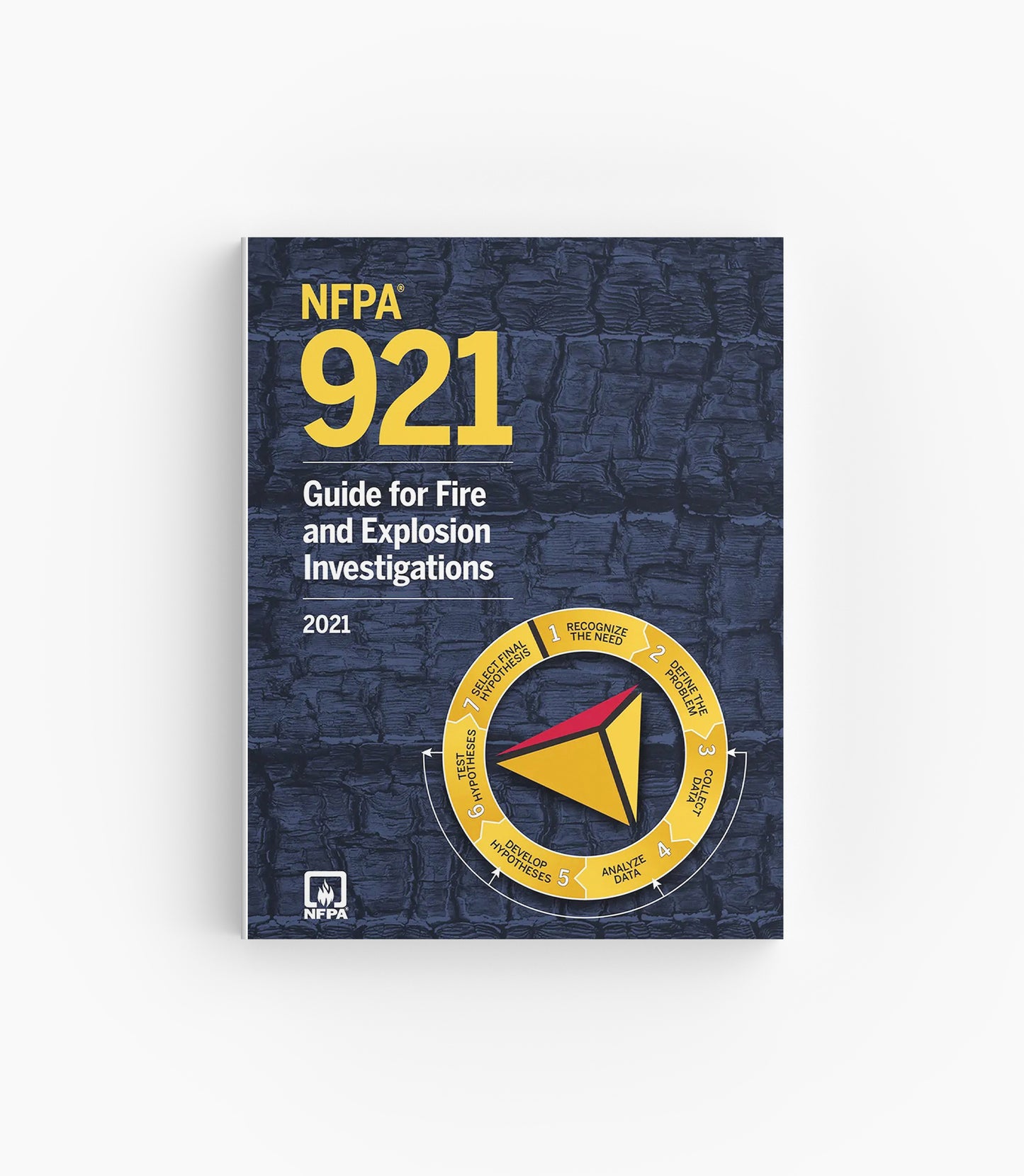
2021 NFPA 921 Guide for Fire and Explosion Investigations
2021 NFPA 921 Guide for Fire and Explosion Investigations
Couldn't load pickup availability
- 30 Day Returns
- 2-7 Day Delivery
- Free Shipping
NFPA 921, Guide for Fire and Explosion Investigations 2021 edition provides the scientific framework for conducting fire and explosion investigations — from establishing origin and cause through documenting findings for legal proceedings. The guide covers application of the scientific method in origin and cause investigations, evidence collection and handling for court admissibility, fire pattern analysis, arc mapping, explosion dynamics, and sources of investigative information. NFPA 921 is recognized by the Organization of Scientific Area Committees (OSAC) as the forensic science consensus guide for fire investigations and is widely referenced in litigation to support or challenge the validity of investigative conclusions.
Important Note on Document Type
NFPA 921 is a guide, not a mandatory code. It provides recommended scientific methods and best practices rather than enforceable requirements. It is widely used as the accepted standard of care in fire investigation practice and legal proceedings.
Who Uses NFPA 921
Used by fire investigators, forensic scientists, insurance investigators, fire marshals, law enforcement personnel, and attorneys involved in origin and cause investigations, litigation support, and insurance claims involving fire and explosion incidents.
What's New in the 2021 Edition
The 2021 edition represents some of the most substantial revisions since the guide's original publication, including:
- Fire pattern text consolidated from throughout the guide into a restructured and rewritten Chapter 6.
- Arc mapping reclassified as a form of fire pattern analysis and integrated with fire pattern analysis as a unified origin determination process in Chapter 6.
- Chapter 20, Classification of Fire Cause, deleted and its content redirected into Chapter 19, Fire Cause Determination, with references to other applicable standards for fire cause classification.
- Revised and expanded coverage of ignitible liquid detection (IGL) canines, including training and certification requirements.
- Revised Chapter 14, Sources of Information, with substantial rewriting of non-scene data provisions.
Stay current with the forensic science consensus methods for fire and explosion investigations.
Free standard shipping on all orders. Need multiple copies? Contact us for bulk pricing.
Share